
UHRC urges early deployment of EAC observers as Uganda nears 2026 polls
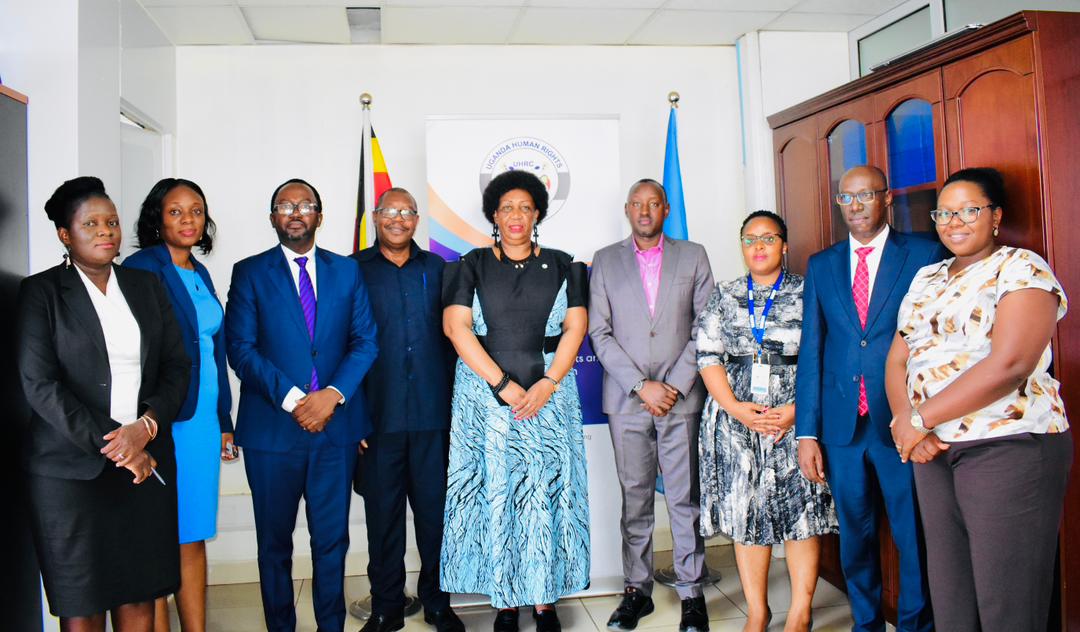
The Chairperson of the Uganda Human Rights Commission (UHRC), Hon. Mariam Wangadya, on Monday hosted the East African Community (EAC) Pre-Election Assessment Team, outlining the state of Uganda’s electoral environment and the Commission’s preparations ahead of the 2026 general elections.
The meeting, held at the UHRC head office in Kampala, was attended by Hon.Crispin Kaheru, Director Pauline Nansamba Mutumba, Ms. Diana Akampereza and Mrs. Doreen Nabatte Mukunyu, among others.
In her remarks, Wangadya described the political environment as active and the civic space as dynamic, noting that while the human rights context is “encouraging,” it still requires close and professional scrutiny. She emphasized UHRC’s constitutional mandate to monitor and report on human rights throughout the electoral cycle, including before, during and after polling.
She told the visiting team that the Commission has been monitoring the electoral process for more than a year, following the release of the Electoral Commission’s roadmap, and has carried out a nationwide hotspot-mapping exercise to identify areas vulnerable to election-related tension. According to Wangadya, this mapping now informs UHRC’s deployment strategy and early-warning efforts.
The Chairperson also highlighted ongoing engagements with security agencies, saying the Commission has held a series of closed-door discussions focused on proportionality, legality and rights-based policing during elections. She noted that recent engagements included both the Inspector General of Police and the Chairperson of the Electoral Commission, with an aim of aligning approaches to election security.
Beyond security, Wangadya said UHRC has worked with partners such as the National Initiative for Civic Education in Uganda (NICE-UG) to conduct civic education on rights, responsibilities and non-violence. She cited joint public appeals involving the Electoral Commission, the Uganda Communications Commission, civil society, religious and traditional leaders, and political actors, calling for calm and lawful conduct during campaigns.
She further informed the team that UHRC has operationalized a Human Rights Election Situation Room to coordinate real-time monitoring from regional offices, receive complaints, track incidents and produce analytical briefs. The Commission, she added, has mobilized funds, trained its election monitoring teams and sought accreditation for its staff as election observers.
At the same time, Wangadya acknowledged that the campaign period remains particularly sensitive. On that basis, she recommended that the EAC deploy its election observers earlier than planned and remain longer, arguing that early and sustained observation would strengthen credibility and allow closer scrutiny of campaign dynamics, security responses and information gaps.
“In Uganda, the campaign period is the most sensitive and shapes the entire electoral trajectory. Observers must witness it,” she said.
The EAC Pre-Election Assessment Team welcomed the briefing and thanked the Chairperson for what they described as a detailed overview of the electoral environment ahead of the 2026 polls.
Uganda’s general elections are scheduled for early 2026, following a period of active campaigning that has drawn increasing attention from domestic, regional and international observers.