

Uganda EC confirms 83,597 candidates and sets full polling schedule for 2026 Elections
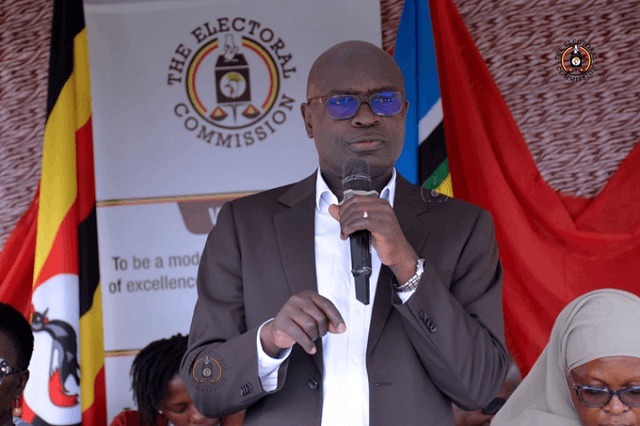
Justice Simon Byabakama, chairperson of the Electoral Commission
The Electoral Commission of Uganda has confirmed that 83,597 candidates have been nominated to contest for 45,505 elective positions in the 2026 General Elections.
The nominations cover the entire range of elective offices from President to Sub County Councillor and mark a major milestone in the national election preparation process.
Voter register and gender distribution
Uganda now has 21,681,491 registered voters. This number includes 11,347,129 women, which represents 53 percent, and 10,334,362 men, which represents 47 percent. The Commission will soon issue Voter Location Slips to help citizens identify their polling stations before the voting period.
Fresh nominations in selected districts
Fresh nominations will take place on 27 and 28 November 2025 in Kassanda, Kaabong, Bududa, Kwania, Nakasongola, Sironko and Tororo. These districts are holding new nominations because some aspirants who had been duly nominated earlier passed away. Only new aspirants seeking to fill those specific vacancies will undergo nomination again.
Confirmed polling dates
The Electoral Commission has published the full list of polling dates for the 2026 elections. Elections for the President and Members of Parliament will take place on 15 January 2026. Elections for Special Interest Groups at Sub County and Municipal levels are scheduled for 19 and 20 January 2026. The Workers Representatives election will be conducted on 21 January 2026. District and City Chairpersons and Councillors will be elected on 22 January 2026. Subsequent elections will run from 27 January to 6 February 2026, covering municipal divisions, youth representatives, older persons, the UPDF representatives and Sub County leadership positions.
Ballot paper production progressing
Ballot paper printing is underway both inside and outside Uganda. The firms engaged include Al Ghurair Printing and Publishing in Dubai, UniPrint in South Africa, Inform Lykos in Greece, Sintel Security in Kenya, Picfare Industries in Uganda and Graphics Systems Ltd in Uganda. Each company is responsible for specific classes of ballots including presidential, parliamentary, district, city, sub county and Special Interest Group ballots. The Commission has asked political parties to submit the names of agents who will witness the delivery of these ballot papers.
Technology deployment and BVVK rollout
To strengthen voter verification, the Commission has procured 109,142 Biometric Voter Verification Kits. Out of this total, 60,000 kits have already been delivered and 49,142 kits are expected before the end of November. All 50,739 polling stations will have a kit. The devices use fingerprint and facial recognition to confirm voter identity and prevent multiple voting. Recruitment is ongoing for 50,739 device operators and 1,050 trainers. Public demonstrations of the upgraded technology will begin soon for political parties, observers and the media.
Petitions and campaign conduct
The Electoral Commission has received about 300 petitions and complaints, most of which relate to nomination processes. The Commission notes that this number is low when compared to the total of 83,597 nominated candidates. During the campaign period, however, the Commission has recorded cases involving unlawful processions, impromptu roadside campaign stops, inciteful language and destruction of campaign materials. It has warned that any individual or political organisation that violates campaign regulations will face sanctions.
Observer and media accreditation
Accreditation for both international and national observers is ongoing. Observers operating in Kampala, Wakiso and Mukono will be accredited at the Commission headquarters. Observers in the rest of the country will be accredited by district and city accreditation committees. Media practitioners covering the electoral process will also be accredited during this period.
The Electoral Commission has assured the public that it is on schedule to deliver a transparent, peaceful and credible election. It has encouraged political parties, candidates and citizens to respect the law and uphold peace throughout the election cycle.