

EACOP partners with IEC to address SME shortfalls
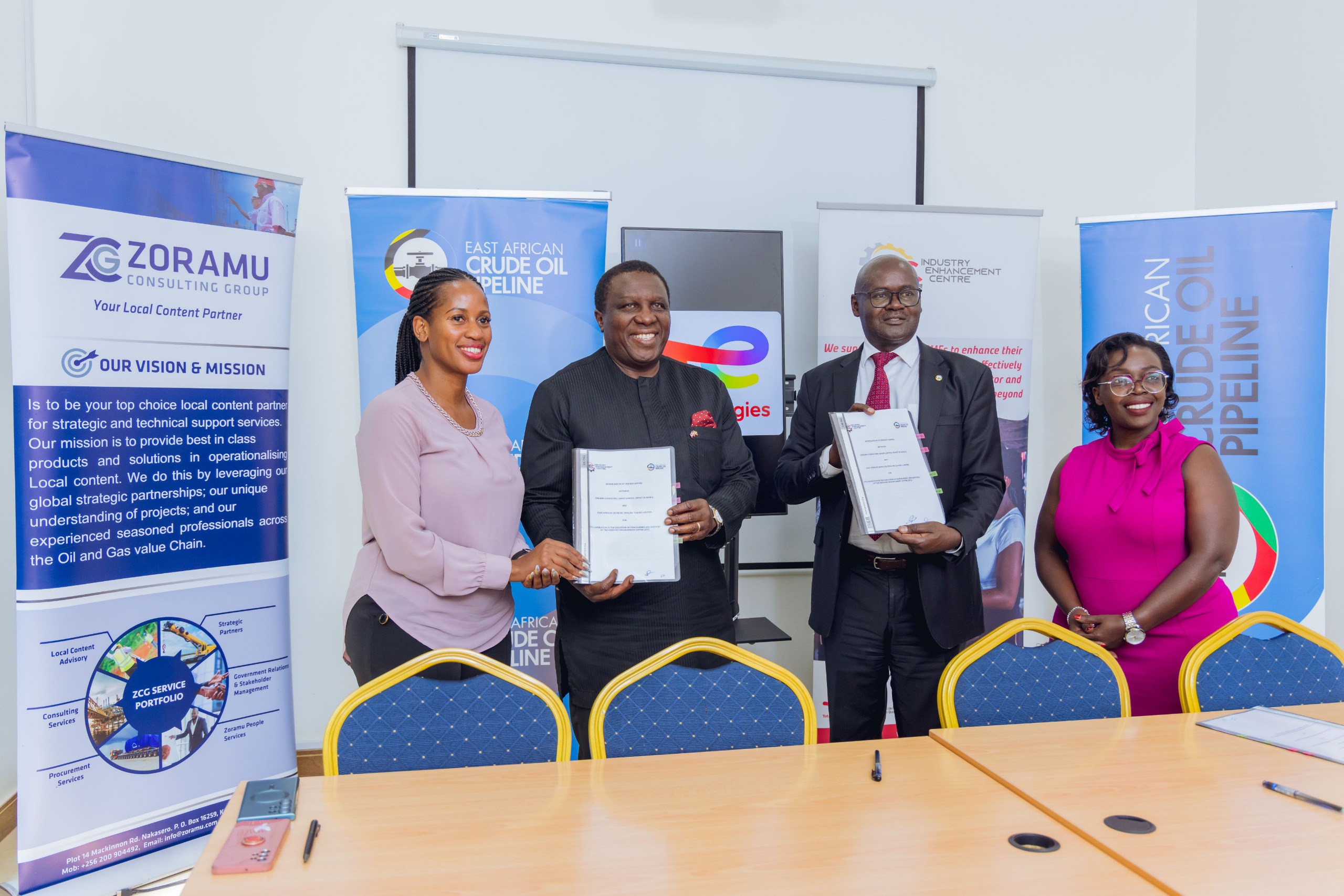
EACOP and Zoramu Consulting Group sign MOU in Kampala. John Bosco Habumugisha (Deputy MD, EACOP) and Jimmy Mugerwa (MD, Zoramu) seal the deal as stakeholders look on.
Kampala, Uganda – The East African Crude Oil Pipeline (EACOP) Ltd has signed a memorandum of understanding with the Industry Enhancement Centre (IEC) in a move intended to tackle long standing capacity gaps among Ugandan Small and Medium-sized Enterprises hoping to participate in the oil and gas sector.
The partnership places the IEC in a more visible role within the national content agenda. The centre, located on Gaba Road in Kololo, was established in 2024 by TotalEnergies EP Uganda in partnership with CNOOC Uganda and the Uganda National Oil Company. Its creation followed the 2013 Industrial Baseline Survey which warned that Uganda risked missing out on oil related economic gains if local companies were not supported to meet international standards.
EACOP Deputy Managing Director JB Habumugisha described the collaboration as a practical step aimed at strengthening firms that have often been sidelined due to limited technical and operational capacity. He said that meaningful participation cannot occur unless organisations like the IEC deliver targeted training and advisory programs to help SMEs understand the sector and its demands.
Habumugisha also acknowledged the complicated environment surrounding the pipeline project. He referred to the ongoing case in Paris challenging TotalEnergies’ role in Uganda and noted that such pressure has shaped how the company approaches compliance, community investment and broader scrutiny related to the energy transition. He argued that Uganda is attempting to transition from a position of limited industrial capacity and that projects like EACOP still require significant local skills development.
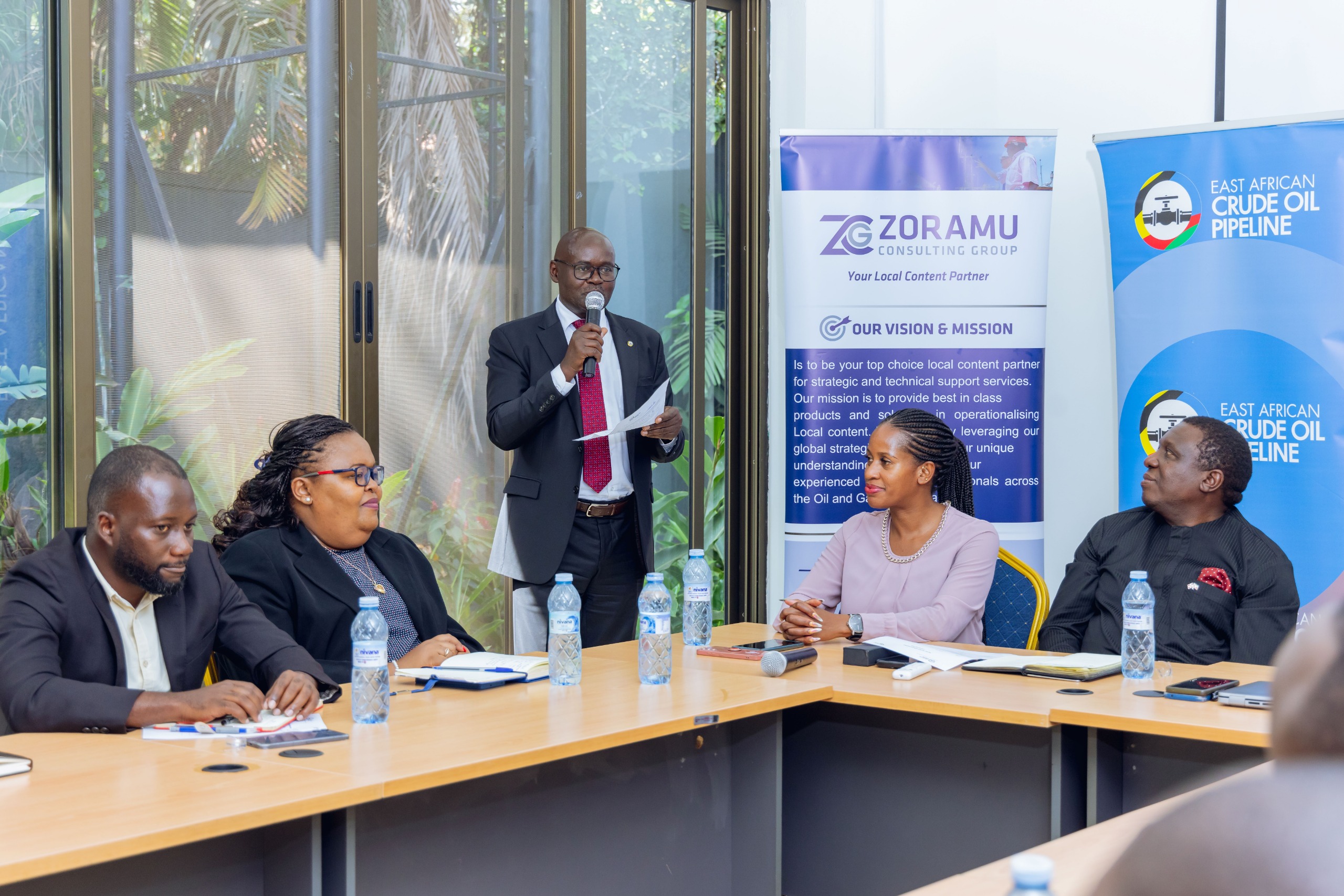
The MoU outlines cooperation on information sharing, outreach events, training programs and connections between EACOP contractors and the IEC network. IEC co manager Jimmy Mugerwa said the centre already works with institutions such as the Uganda Revenue Authority, the Petroleum Authority of Uganda, the Uganda Petroleum Institute Kigumba, Makerere University and Kyambogo University. He said the new partnership will help SMEs understand standards required for pipeline related contracts and broaden their access to financing and professional networks.
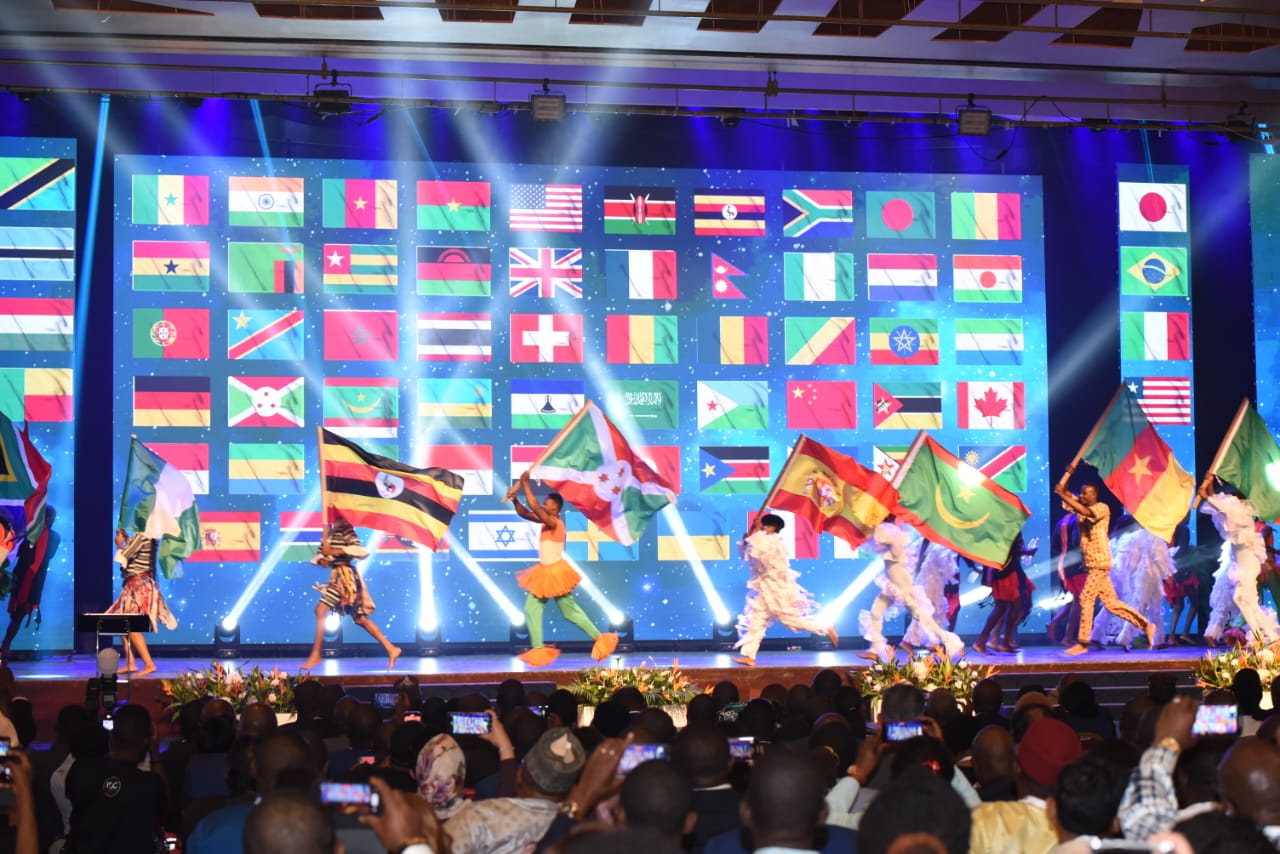
EACOP has been increasing its engagement with training and professional bodies including the Institute of Surveyors of Uganda and the Uganda Industrial Research Institute. The company recently received recognition at the sixth National Content Conference for its socioeconomic initiatives along the pipeline corridor where it has funded multiple community projects.
The new partnership highlights ongoing attempts to increase Ugandan ownership of activities within the oil and gas sector, a goal that has struggled to keep pace with project timelines and foreign contractor dominance. The real test will be whether SMEs not only receive training but also secure work within the pipeline supply chain, something local businesses have repeatedly said remains difficult despite years of national content policies.