
When the rains come, Uganda is still unprepared
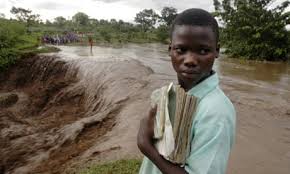
A boy holding near the village of Bukalasa, eastern Uganda. Photograph: Stephen Wandera/AP
As heavy rains continue to batter different parts of Uganda, renewed attention is being drawn to the country’s disaster risk management systems, with civil society organisations warning that preventable suffering persists despite existing government interventions.
Recent landslides in the eastern highland districts of Bukwo, Kween and Kapchorwa have claimed lives and displaced families, once again highlighting Uganda’s vulnerability to climate-related disasters. Similar patterns are observed in Kasese, where the Nyamwamba River bursts its banks almost annually, as well as in Bundibugyo, Bududa and Bulambuli, areas that remain prone to landslides despite past resettlement efforts.
According to development experts, disasters pose a significant threat to Uganda’s long-term development goals under Vision 2040. The World Bank estimates that for every US dollar invested in disaster preparedness and mitigation, countries can save between US$8 and US$15 in disaster response costs. Yet Uganda continues to spend more on emergency response than on prevention.
Global indicators paint a worrying picture. The 2022 Notre Dame Global Adaptation Index ranked Uganda among the 12 most vulnerable countries to climate change and placed it 163rd out of 192 countries in preparedness to deal with climate impacts.
Government has taken steps to strengthen disaster response mechanisms. The Public Finance Management Act of 2015 established a national Contingency Fund, allocating 0.5 percent of the previous year’s national budget to respond to disasters. In the current 2025/26 financial year, government allocated UGX 200.3 billion for disaster-related interventions, including early warning systems and relief support, alongside UGX 169 billion under the Contingency Fund. Additionally, the District-level Contingency Planning Methodology was introduced to help disaster-prone districts integrate disaster risk management into planning and budgeting.
However, implementation gaps remain evident. The Auditor General’s report for the financial year ending June 2024 revealed that resettlement areas for disaster victims often lack essential services such as roads, electricity, schools and health facilities, creating new vulnerabilities for already affected communities.
Urban centres are also increasingly exposed. In Kampala, heavy downpours routinely leave parts of the city submerged, with the Nakivubo Channel frequently cited as a flashpoint. Environmental experts argue that unplanned urban development, which overlooks climate considerations, continues to undermine economic activity, disrupt transport and threaten livelihoods.
In northern Uganda, West Nile sub-region faces persistent flood risks, particularly around the River Nile crossing at Packwach Bridge. Despite recurring flooding, concerns have been raised over the placement of docking points within flood-prone zones, while longer-term solutions such as the proposed Para Bridge within Murchison Falls National Park remain unimplemented. Compounding the challenge, local governments in the region reportedly receive only about 1.3 percent of total district budgets, limiting their capacity to respond to emerging disasters.
Planning gaps further complicate the situation. Data from the National Planning Authority shows that only 15 percent of expected Physical Development Plans nationwide have been approved. At district, municipal and sub-county levels, approval rates remain low, raising concerns about how climate resilience is being integrated into local development.
Civil society organisations, including the Civil Society Budget Advocacy Group (CSBAG), Advocates Coalition for Development and Environment (ACODE) and the Rural Initiative for Community Empowerment (RICE), argue that stronger institutional and financing frameworks are urgently needed. They have pointed to delays in passing the National Disaster Preparedness and Management Bill, which was tabled in Parliament in 2024 and proposes the establishment of a Disaster Management Commission to enable faster and more accountable responses.
Financing remains another key concern. The Natural Resources, Climate Change, Environment and Water Management programme, which anchors climate action initiatives, saw its budget cut by 51 percent in the 2025/26 financial year, dropping to UGX 364.86 billion from UGX 744.83 billion the previous year.
As Uganda prepares for the 30th Conference of the Parties (COP30), stakeholders are urging government to strengthen commitments to climate adaptation and ensure that disaster and climate financing reaches vulnerable communities at the grassroots. Analysts argue that investing in prevention, coordination and transparency today will not only save lives but also safeguard livelihoods and support sustainable development.
Balancing economic development with ecosystem protection, experts say, will be critical as climate risks intensify. Integrating climate resilience across all sectors, they note, is no longer optional but essential for Uganda’s future.