
Shincheonji denies political interference, seeks joint probe
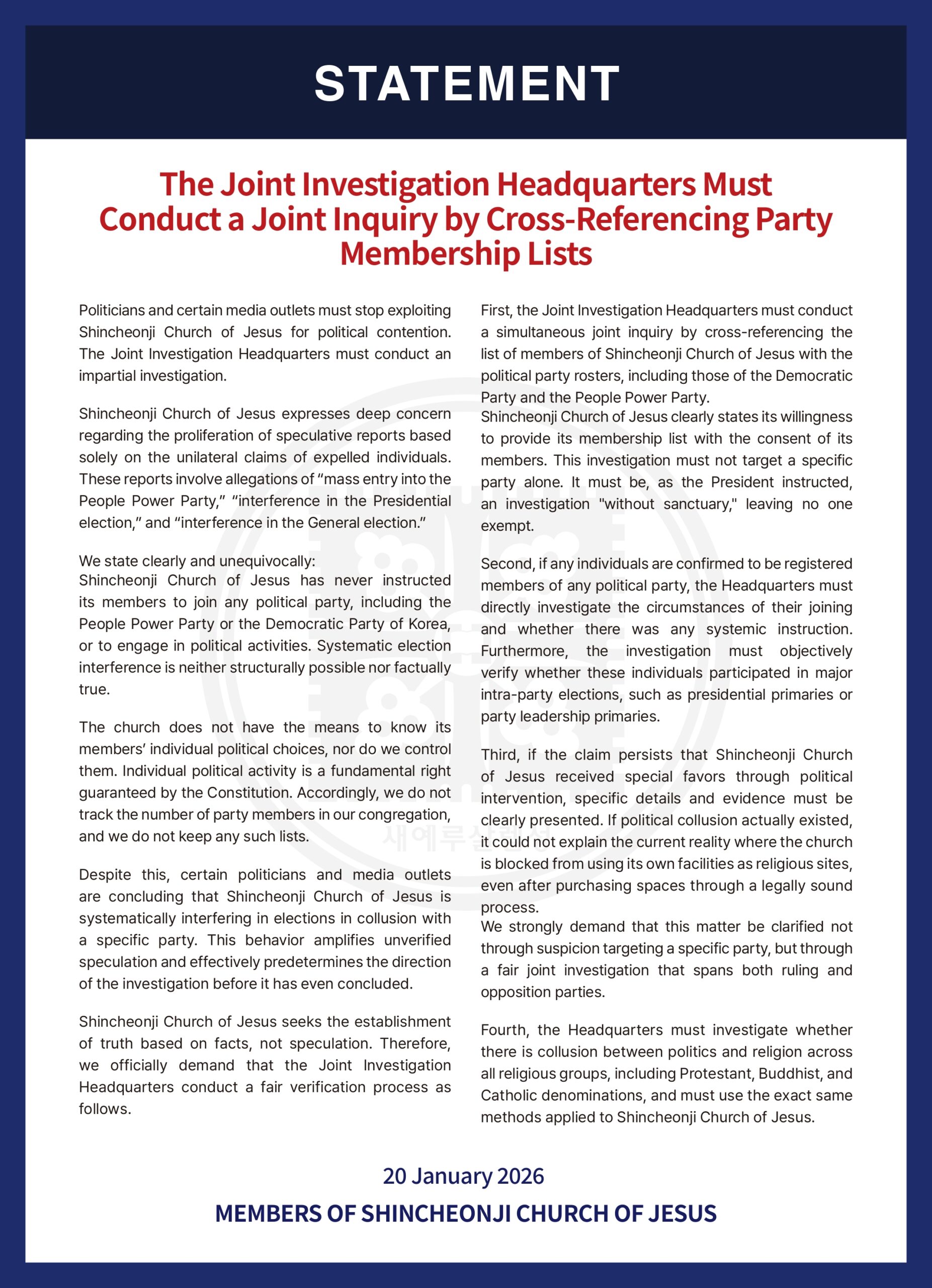
Seoul Shincheonji Church of Jesus has publicly called on authorities to conduct a fair and comprehensive investigation into allegations of political interference, rejecting claims that the church orchestrated mass political party enrollment or election manipulation.
The call comes amid growing political debate and media scrutiny surrounding alleged ties between religious organizations and party politics. Some reports have cited claims by expelled former members alleging coordinated entry into major political parties and involvement in recent presidential and general elections.
In a statement released on 20 January 2026, Shincheonji firmly denied these allegations, stating that it has never instructed its members to join any political party or engage in political activities. The church emphasized that coordinated election interference is neither structurally possible nor factually accurate.
According to the church, it does not track or control the political affiliations of its members, describing individual political participation as a constitutional right. The statement said the church does not maintain records of party membership, nor does it have the means to know or manage members’ personal political choices.
Despite this, Shincheonji expressed concern that some politicians and media outlets have treated unverified claims as established facts, effectively shaping public opinion and the direction of investigations before conclusions are reached.
To address the controversy, the church formally requested that the Joint Investigation Headquarters conduct a simultaneous joint inquiry by cross-referencing Shincheonji’s membership list with political party rosters, including both the ruling People Power Party and the opposition Democratic Party of Korea.
Shincheonji stated its willingness to provide its membership list, subject to member consent, and stressed that the investigation must not focus on a single party. Citing presidential guidance calling for investigations without sanctuary, the church argued that fairness requires equal scrutiny across the political spectrum.
The church further called for investigators to directly examine the circumstances under which any individuals may have joined political parties, and to determine whether there was any form of systemic instruction. It also urged authorities to verify whether such individuals participated in major intra-party processes, such as presidential or leadership primaries.
Addressing claims that Shincheonji received political favors, the church questioned the logic of such assertions, pointing to ongoing restrictions that have prevented it from using legally purchased properties as religious facilities. It argued that these realities contradict allegations of political collusion.
Finally, Shincheonji called for broader consistency in the investigation, urging authorities to examine potential political and religious ties across all religious groups, including Protestant, Buddhist, and Catholic organizations, using the same standards applied to Shincheonji.
The church concluded by stating that the truth must be established through evidence rather than speculation, and that it supports an investigation grounded in facts, constitutional principles, and equal application of the law.